



Have you ever worked toward a goal for so long that, once you achieved it, you forgot why it mattered? Perhaps that’s how you feel about establishing elders in our church. Maybe you’re unsure why elders are important or skeptical they will make any difference. Some might even think, “We tried having elders at this church before, and it didn’t work.” However, church leadership isn’t shaped by what is convenient, popular, or pragmatic. Instead, it must be shaped by the Word of God.

Elders and the Bible


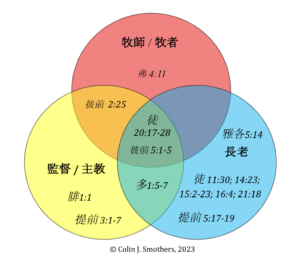
The Bible clearly teaches that God appoints elders to lead the church (Acts 14:23; Acts 20:17; 1 Timothy 5:17; 1 Peter 5:1). While the term “elder” is used most often, these leaders are sometimes called “overseers” or “pastors” (Acts 20:28; Ephesians 4:11; Philippians 1:1; 1 Timothy 3:2; Titus 1:7). Churches normally have multiple elders, and some elders might be financially supported so they can “labor in preaching and teaching” (1 Timothy 5:17-18; 1 Corinthians 9:3-14).
Churches are often tempted to identify leaders based purely on their abilities or popularity, but the Bible’s emphasis is that elders must have godly character (1 Timothy 3:1-7; Titus 1:5-8). Also, elders must be able to teach, which primarily means they must “hold firm to the trustworthy word as taught”, not necessarily that they all must be eloquent orators (1 Timothy 3:2; Titus 1:9).
Elders and Deacons
Elders are responsible to lead, teach, and shepherd, but the Bible does not give those responsibilities to deacons. Instead, following the pattern that was established in Acts 6, deacons are faithful men and women who serve the practical needs of the church so that the elders can focus on the spiritual needs of the church like prayer and the ministry of the Word (Acts 6:4). In other words, elders serve by leading, and deacons lead by serving. This means that elders are not primarily representing the interests of the people, like elected politicians who follow popular opinion. Instead, elders are primarily representing the interests of God, which is accomplished by teaching God’s Word in order to lead God’s people. This is why being able to teach is an important qualification for elders but not deacons.
Elders and the Church
However, having elders is not just biblical, it is also beneficial for our church.
First, biblical eldership provides clarity. Scripture clearly defines the qualifications and responsibilities of elders. This clarity helps both the elders and the church know what they should expect. Having a clear job description helps both an organization and an employee to thrive, and the same is true for churches and their leaders.
Second, biblical eldership provides greater spiritual care. God calls elders to shepherd souls, not just sit in meetings and make decisions. The church is not merely an organization that requires management or an audience that needs a preacher. The church is a flock with sheep who need to be fed when they are hungry, protected when they are in danger, and found when they are lost. In other words, the church is a flock that need shepherds.
Without this focus on shepherding, church leadership can drift towards managing programs and meeting to make decisions, rather than caring for souls. This drift is especially common in churches like ours because having multiple languages, cultures, and congregations brings additional complexity which requires more time and energy. In these situations, it’s tempting to appoint board members who can effectively manage an organization rather than identifying godly elders who will faithfully keep watch over souls (Hebrews 13:17).
Lastly, biblical eldership provides unity. Like a beautiful vase, church unity is both precious and fragile. Unity glorifies God and blesses the church, but it is easy to break and difficult to rebuild. While unity is important for all churches, unity is particularly important and especially challenging in immigrant churches with multiple services, languages, and cultures.


Typically, a church will follow its leaders, so unified leaders produce a unified church and divided leaders produce a divided church. Therefore, having biblically qualified elders who have godly character, especially the courage to correct and the humility to be corrected, will strengthen the unity of the leaders and the unity of the church. However, unqualified and ungodly leaders inevitably weaken the unity of the leaders and the church. Therefore, godly, humble elders who consider the interests of other elders and other congregations are priceless gifts to the church.
Conclusion
Deciding how to structure church leadership is not about creativity, convenience, or tradition. Instead, it is about faithfully and humbly following the clear teaching of God’s Word. This is why we have worked so hard to establish biblical elders. It may take time for the church to adjust and for these new elders to grow as overseers and shepherds, but God’s design is wise and good. And we know that those who trust in and follow His Word will never be disappointed!


